How I Support Women Through IVF: My Acupuncture and Herbal Medicine Protocol
Updated: May 21
If you found your way to this post, there's a good chance you're navigating an IVF cycle — one of the most demanding experiences in fertility care.

Most of the women who come to me have already been through a lot. One IVF cycle, sometimes more. Multiple IUIs. A long road of difficulty that has left them depleted, tired, and a little deflated. By the time they reach my door, I am typically the last practitioner they are coming to.
That context matters to how I work. This is not a generalized acupuncture approach. What I do is built around each woman's specific IVF history, her labs, her ultrasounds, and where her body actually is — not where it should be on paper.
Here is how my protocol works, from preparation through the two-week wait.
Preparation: Two to Three Months Minimum — More If You're Depleted
Ideally, women should be coming to me at least two to three months before going into an IVF cycle — and more than that if your body has already been through a prior IVF cycle, or if you're coming in overworked and depleted.
When I review a woman's prior cycles, I am looking at everything: how many eggs she started with, how her body responded to the ART medications and the dosing, how many eggs were retrieved, how many were mature, how many fertilized, and how many made it to a three-day or five-day freeze. All of that tells me where her fertility potential is right now.
What I am working toward is increasing the quality and quantity of her antral follicle counts. The more balanced and nourished a woman is going into stimulation, the easier it tends to be for her body to respond well. If I am given enough time, I monitor egg count from cycle to cycle before stimulation even begins. I want to see better egg count, better egg quality. Lab work on FSH, LH, estrogen, and progesterone helps me see how balanced her cycles are.
Egg count matters especially for IVF because you need the numbers. More eggs means the body has probably recovered — the follicles are surviving and making it to become antral follicles, which means they are healthier. Here is why: it takes up to 13 cycles from a primordial follicle — a baby follicle — to a mature antral follicle. If a woman is healthy and well-nourished, those follicles are supported along the way and her counts will be good. If she is depleted, overworked, or not getting enough nutrition, follicles die along the way — and counts drop. (PCOS is an exception: women with PCOS often show many follicles, but for different reasons and with a different imbalance driving it.)
What I am doing in this preparation window — especially with acupuncture focused around the ovaries — is bringing blood flow to the follicles that are developing inside them. In my practice, herbal medicine is foundational here, not an add-on. As a Chinese herbalist, I use herbal formulas to nourish a woman's Blood, Yin, Yang, and Jing, and to remove stagnation that may be blocking optimal blood flow to the reproductive organs. What herbal medicine can do in my work that acupuncture alone cannot: replace what she is depleted in — restoring Yin and Blood at a level that makes the acupuncture work more effectively. In my experience, the combination consistently gives me more to work with than either on its own.
More on what Blood, Yin, Yang, and Jing mean in fertility care: Fertility Foundations
The formulas I use draw from Acupuncture and IVF by Li Fang Liang , which presents evidence that acupuncture and herbal medicine can increase IVF success rates significantly. The book is largely focused on herbal medicine and its role in IVF preparation — and I have used those formulas with both female and male patients with good results.
During Stimulation: Monitoring and Managing the Body's Response
Once a woman is in stimulation, my approach shifts. Before each appointment, I review her ultrasound reports. I use those reports to determine how I am going to perform the acupuncture, what herbal medicine she receives, and at what dose. This is not static — it adjusts based on how her body is responding as the cycle progresses.
During this phase, I am also managing the side effects that come with the medications: hot flashing, night sweating, bloating, mood shifts, fatigue. Both the acupuncture and the herbal medicine are tailored to address whatever is coming up for her specifically.
The most important treatment I do during the actual stimulation process — and probably one of the most important aspects of how I work with IVF patients overall — is follicle size synchronization.
In my practice, I need to know what the follicles look like on ultrasound before a woman comes in for each appointment. That report tells me how I am going to needle and what herbal medicine to give at what dose. Without it, I cannot properly strategize the treatment — and I risk doing the opposite of what I intend: pushing the larger follicles ahead while the smaller ones fall further behind. When that happens, you cannot optimize the full retrieval.
What I am working toward is getting the follicles as close to the same size as possible. When they develop together, more can be retrieved, and more will be mature enough to fertilize. The goal is to yield as many healthy embryos as possible. Reviewing the ultrasound before every treatment is not optional in how I work — it is what makes the difference between a protocol that serves her and one that falls short.
After Retrieval: Recovery Before Transfer
After retrieval, the earliest a transfer typically happens is six to eight weeks out. If a woman is depleted after stimulation — and many are, because the retrieval and the medications take a real toll — I recommend focusing on recovery first.
If I am given that window, we are renourishing and rebalancing her body toward an optimal ovulation cycle. The more nourished and balanced she is going into transfer, the easier it is for her body to receive an embryo. This is another phase where herbal medicine does significant work: rebuilding what was depleted during stimulation and preparing the body for what comes next.
The Day of Transfer: The Paulus Protocol
I typically see women the day before transfer and the morning of. If they are not able to make it the morning of the transfer — or immediately following it — I may see them the next day, or as soon as they can come in.
That treatment is based on the Paulus protocol — a German study in which 160 women were enrolled. Half received acupuncture before and after transfer; half did not. The group that did not receive acupuncture had approximately a 26% success rate. The group that did receive acupuncture had a success rate of nearly 43%.
Beyond the outcome data, this treatment is specifically designed to prevent uterine contractions or cramping, calm the nervous system, and manage whatever symptoms she is experiencing at that moment — hot flashing, night sweating, dizziness. The goal is for her body to be as relaxed and balanced as possible at the time of transfer.
The Two-Week Wait
The two-week wait is the hardest part of all of this.
In my work during those two weeks, acupuncture is focused on supporting rest, reducing anxiety, and helping her body remain relaxed and balanced. I also use herbal medicine during this time — to prevent miscarriage, address any bleeding, and manage cramping if it arises. Whatever comes up — that is what I am managing alongside her.
Working With Me: Acupuncture During IVF
I work with a limited number of patients at a time so that each woman's care is genuinely individualized. My waitlist is currently open.
If you are preparing for an IVF cycle and want to talk through whether this kind of support makes sense for where you are right now, you are welcome to reach out to me directly.
You'll receive a confirmation email right away. My office will follow up within 1–2 days with a call to confirm your spot and answer any questions.
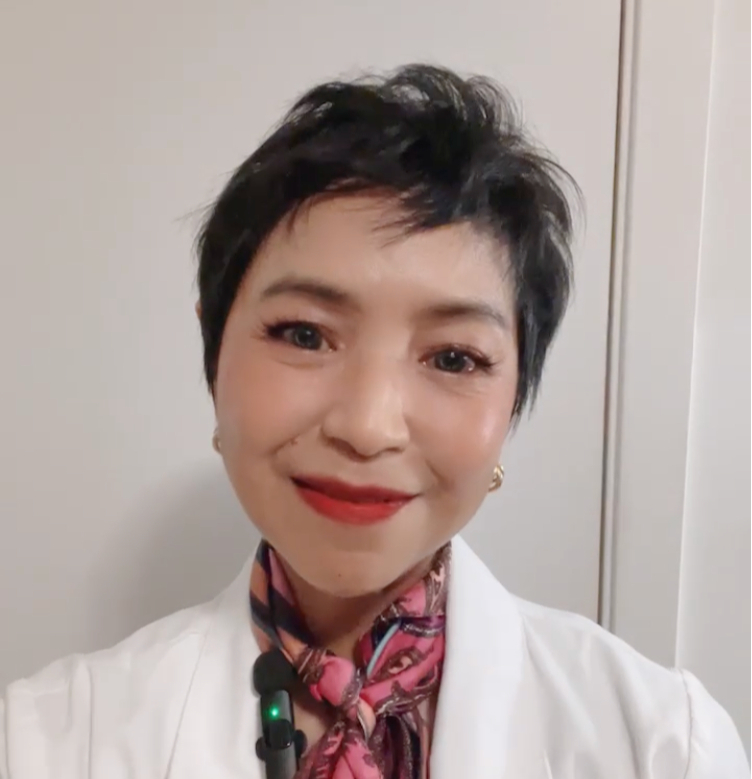
— Edie Uchida, L.Ac., MAOM, Dipl. OM
Want to learn about the acupuncturist you'll be seeing? Click here to learn more about me.

Comments